

Have you ever considered what the best text to image ratio in an email is? We don’t mean that you should get out a ruler and measure the exact text to image ratio in your emails; an estimate is fine. But having a good idea of what ratio is most effective could increase your click rates. More clicks results in more conversions and more impact!
Let’s talk about the value of images in an email.
The average time people spend reading marketing emails is, sadly, only 10 seconds (source: Statistica). Even if your text is extremely compelling, most people aren’t opening their emails to read a novel. In almost every case, long blocks of text just won’t get read.
You’ve got ten seconds to educate your reader or convince them to take an action. With that in mind, it makes the most sense to begin with a visual element. Images will help get the message across, even when people are scanning.
But let’s not go so far as to make the email one big image. We’ve all seen it happen, and sometimes it works, but sometimes it’s an epic fail. We’ll explain why, but first:
Let’s talk about the value of text in an email.
Some email providers don’t automatically load images. As a matter of fact, here’s an apology email that we got recently, opened in Gmail:
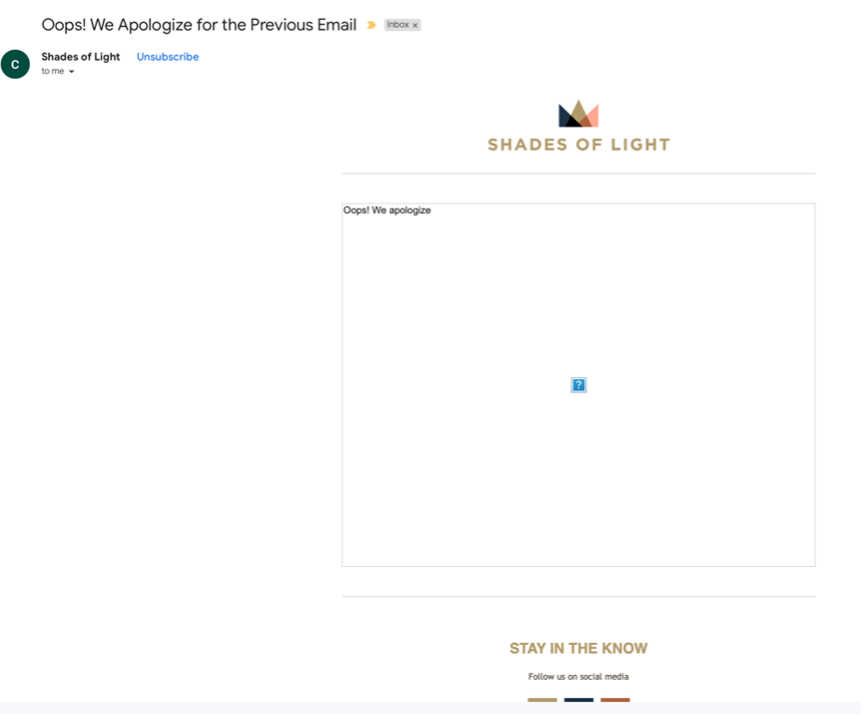
What happened to their image? What were they trying to say? Would we have purchased a product if they offered a discount in their apology email? Maybe. We willingly subscribed, so there is a decent chance they could have turned their mistake into a sale. But alas, there was no text. No buttons. No nothing, but a repeat of the subject line. Whomp whomp. This is why emails that are entirely images are not practical.
Another reason to have text in your emails is to enable users to search. For example, what if a consumer suddenly realizes that have a need for your service – months after they saw the email about it? They may try to do a search, but it will likely display no matches… because the important text was displayed as an image file. Another missed opportunity.
Now that we know we need both text and images:
What is the perfect image to text ratio?
We did some research, and most people say that a 60:40 text to image ratio is best. But the perfect ratio also depends on a few factors, such as:
- The purpose of the email
Let’s consider the example of an email with a goal to get more support from volunteers. They’ll need to provide context, possibly stats, tell a compelling story, and have a call to action. Images of the constituents, infographics, or other stock images may help support the message – and keep people reading. With all those elements, this would likely be a longer email with a higher text to image ratio.
However, if the goal is to get readers to attend an event, they may want to have large images of people speaking, the venue, a big button, and less text.
2. Your target audience
If your users are looking for detailed information or are more savvy, you may need to have more text to communicate complex ideas. If your users are less likely to be invested in your cause, then shorter emails with more images and incentives may be more effective.
3. Readability and accessibility
In general, the most effective messages will ensure that the message is clear in either case: if there was no text visible or if there were no images loaded.
Also, all images (such as the empty email example above) should have descriptive alt text. If the image doesn’t display, readers will still know what the email is trying to communicate. Plus, it is more accessible for those who are visually impaired.
Here’s an example of one of our most successful emails.
No, this wasn’t planned. It just happens to be one of our emails on… how to write a good email.
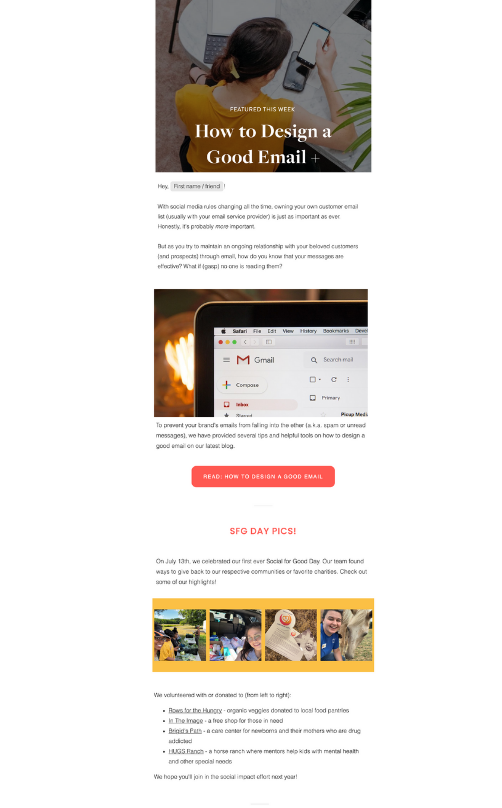
Note the image to text ratio is probably around 50:50, with a large image to start. Buttons, white space, and relevant images are peppered throughout the text. People clicked on the big red button, but also the bulleted links to nonprofits that our team members supported.
Flodesk does a great job in helping us format our emails. We can easily include stock images or upload our own images. Our calls to action are text-based, and we also embed links within the text. If the images don’t show up, people still get the message.
To wrap it up
Both text and images are needed for most successful emails. The 60:40 ratio of text to images is a helpful starting point, but your text to image ratio should depend on the type of message and your target audience. It’s a great idea to look back at your most successful emails (or keep track going forward) to see what ratio works best for your audience. If you need help getting started, we’re here. Just shoot us a message.